Panel · Ahrefs Evolve · 2025
SEO in the Era of AI and Reduced Clicks: What’s Actually Working
From my Ahrefs Evolve panel: modular content, HTML tables, why your comparison pages get ignored by AI Overviews, and why CRO matters more than ever.
By Sebastien Edgar · 9 min read
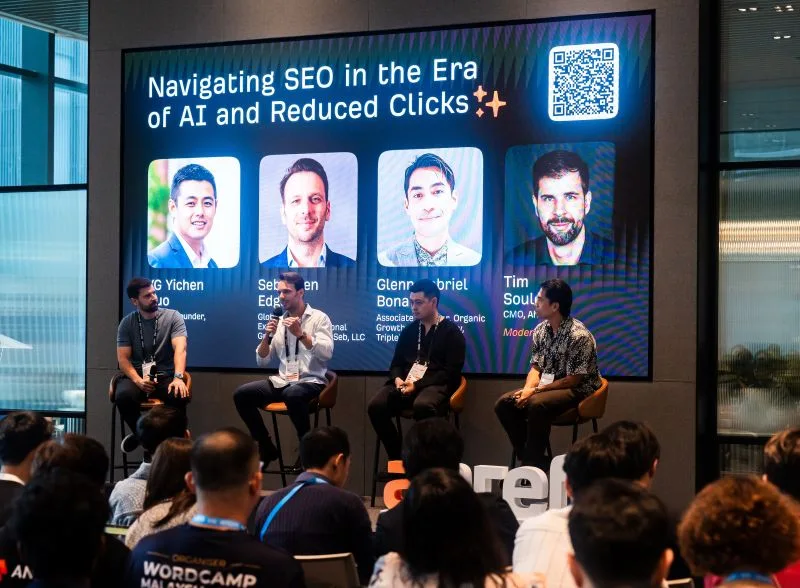
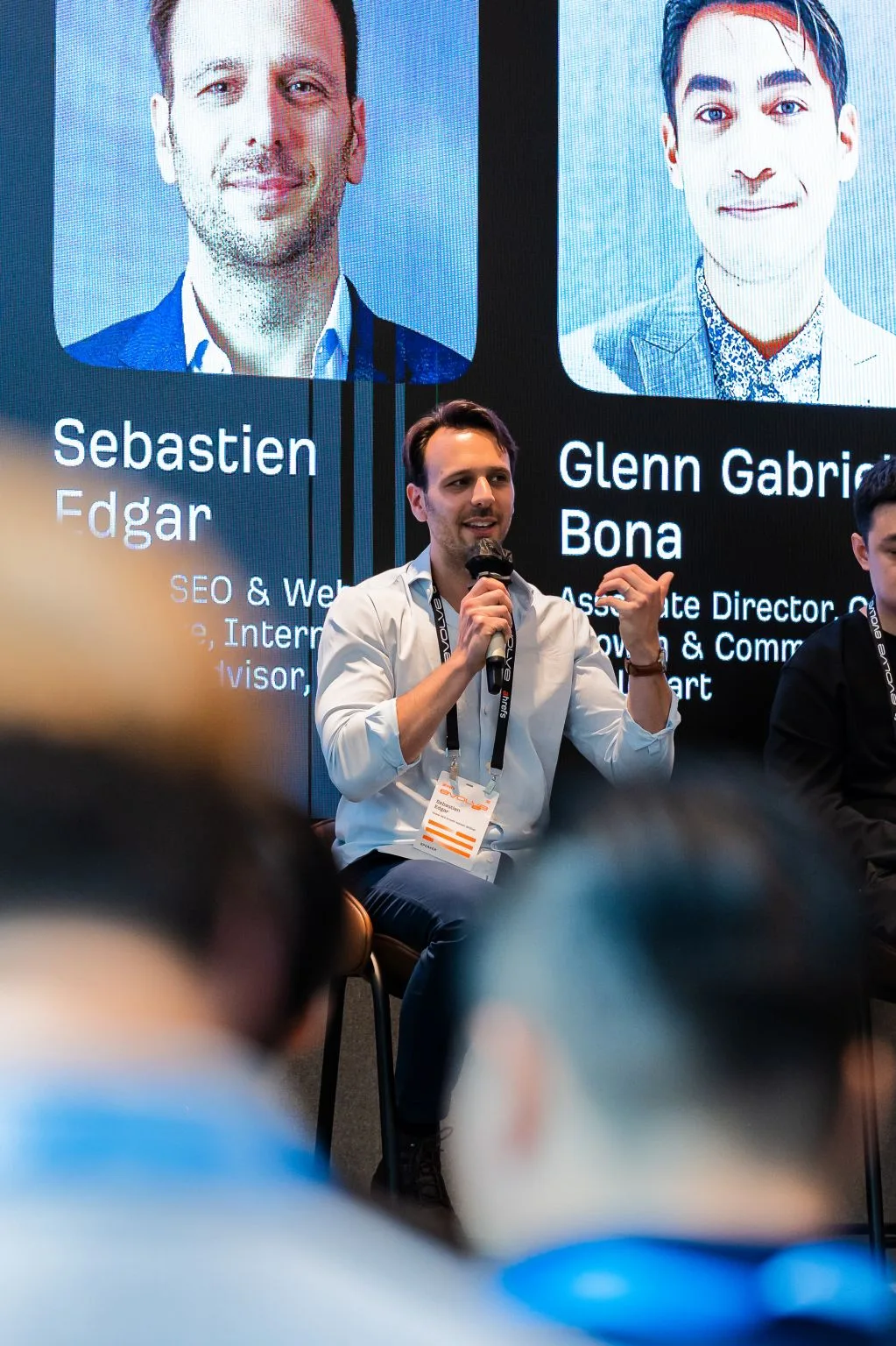
Sebastien answering a question during the panel 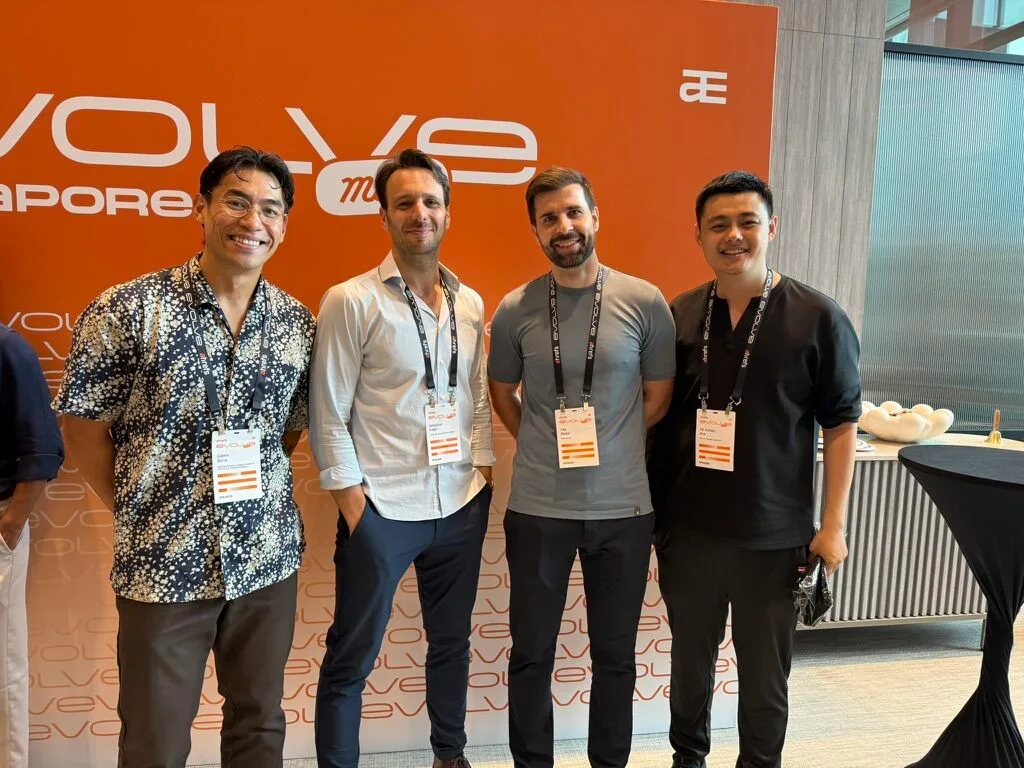
Panelists together in front of the Evolve backdrop
I was invited to join a panel at Ahrefs Evolve on navigating SEO in the era of AI and reduced clicks. Everyone has an opinion on AI search right now, so I wanted to keep my part grounded in what we’re actually seeing across Square, Canva, Atlassian and the clients I work with. Here’s a write-up of the main points.
First, a bit of perspective
Declining CTR is nothing new. We’ve been through this before with featured snippets and with Google steadily adding more ads above the fold. AI Overviews are following a very similar path: they started with the safest bets – low-competition, fact-based informational queries with low CPC and low difficulty. That mirrors the early days of featured snippets, and it makes sense, since it limits the impact on Google Ads revenue. But make no mistake, this is the testing phase.
It’s also not global. France doesn’t have AI Overviews, and South Korea mostly uses Naver. And while ChatGPT is growing extremely fast, most of that growth comes from workflow and coding prompts, not search. Google handles around 14B searches a day versus roughly 37M search-like queries on ChatGPT (out of about 280M daily prompts). Right now, I’m more “concerned” about AI Overviews taking clicks than about ChatGPT.
Content is becoming the building blocks of AI answers
The “longer is better” mindset needs to go. If an answer can be given quickly, an LLM will understand it without a 3,000-word article. Break content into modular, bite-sized, context-rich fragments that AI can parse and reuse: FAQs, how-tos, definitions and standalone data points. Answer the question immediately and cut the fluff.
Square’s glossary is a great example. AI Overviews only referenced Square when no .gov sites were present (there’s a clear preference for high-authority domains, much like Google). But even when Investopedia ranked #1, AI Overviews cited Square URLs nearly 60% of the time. The content was shorter, questions were answered right away, and paragraphs and listicles were used more often. Only short snippets were pulled, rewritten and cited, but always linked back to the original source.
Adding FAQs with schema, even on top-of-funnel posts, also drove a 30% increase in referrals from generative AI platforms. The numbers are still small, but the direction is clear.
HTML tables are a huge winner
Intercom had convoluted feature pages, and LLMs were mentioning the wrong features in their responses. Writing more content across different subdirectories didn’t fix it. A clear, feature-rich HTML table did.
Here’s the twist with comparison content: it may rank #1, but it’s often ignored by LLMs and AI Overviews. AI Overviews ignored squareup.com for every “Square vs.” query, even though Square ranked first, and leaned on neutral sources instead. LLMs are essentially doing their own comparison. That makes product page content what matters most, so put that feature-rich table on the product page itself.
Mentions are the new backlinks
External mentions from trustworthy sources matter a lot (remember, LLMs are trained heavily on sources like Wikipedia). One of my fellow panelists showed how easy it was to game a Perplexity answer by publishing a handful of pages on “who is the best social media manager” and landing at #1 or #2. Maybe advertorials make a comeback! Instead of chasing links, work on mentions, with your main keyword or feature as close as possible to your brand name. And make sure your brand is represented accurately and positively.
Sometimes the simplest optimizations work best. Keep the term closest to your “keyword” literally close to it on the page.
Hyper-tactical visibility factors
We’re currently testing elements from a 2024 study on what increases visibility in generative engine responses. The reported lifts were:
- Quotations: +41%
- Statistics: +31%
- Fluency: +28%
- Citing sources: +27%
- Technical terms: +18%
- Easy to understand (Flesch-Kincaid readability): +14%
- Authoritative tone: +10%
In our own data, statistics content drove more traffic than any other content type. And don’t just create new blog posts – go back and hyper-optimize the old ones.
Know which query types are losing the most
Not all lost clicks are equal. Are informational or transactional queries losing the most? You might have lost clicks but not conversions, because the users who do click now have higher intent. Look at search impression growth and whether it correlates with growth in direct traffic.
Interactive content is where AI doesn’t (yet) own the niche. At Canva, every term related to tools and generators grew year over year, and generators and features (basically mini tools) went from 500K to 1.5M weekly clicks while the blog declined. For lower-awareness clients with plenty of blog articles, the content getting clicks from LLMs is “state of the union” content: “future of accounting,” “hybrid work statistics,” that sort of thing.
Answer engine optimization over keyword lists
Instead of focusing purely on keywords, group similar questions together and answer them on one page. Just like keywords, there are head, mid and long-tail questions. It’s hard to own the big, broad questions, but you can win the specific, niche ones with focused content. Pull from AnswerThePublic, AlsoAsked or any question finder. Prompts might be worded differently, but the intent is pretty similar.
Use search insights across channels
Search volume isn’t unique to organic search. If people search for something on Google, they’re thinking about it when they arrive through direct, social or email too.
Our Japanese glossary at Square was a winner in organic search (helped by hreflang authority from the US site), but what worked even better was condensing it into quick, bite-sized info cards shared on social. Even if an initiative isn’t driving as many organic clicks as it used to, if it succeeds cross-channel, the SEO team can take credit for it.
CRO is now critical
As top-of-funnel traffic shrinks, your transactional content matters even more. For now, it should hold steady or grow, though not always – Atlassian’s product pages were down 5% year over year despite a 16% increase in impressions.
Any SEO should own, or be heavily involved in, web strategy, web experience and CRO. Incremental conversion gains are worth more than incremental click gains. An approachable starting point is to focus on growing clicks on your above-the-fold CTAs.
Don’t forget the technical side
JavaScript rendering is tough and resource intensive. Googlebot (and by extension Gemini) is the only crawler that reliably renders JS, and it took Google years to master. JS rendering can even lead crawlers to push buttons like “Add to cart.” Isomorphic rendering, where the same JavaScript runs on both server and client, is what matters most. React is mostly isomorphic.
Use proper HTML5 elements too, like <dfn> for definitions, so LLMs can easily spot when a term is being defined. And monitor your server logs. Which pages are AI crawlers hitting the most, and where are they getting stuck? They don’t have Google’s crawling experience.
Focus on standalone sections that answer one question well. Clarity and precision win.
More articles
Panel · October 2026
Building B2B Trust in Japan and Korea: Where Content Ends and People Begin
Notes from my panel with Li Yong (Nuvei) on why global playbooks break in Japan, why Korea moves faster online, and where content should hand over to people.
Read article (8 minute read)
Podcast · 2026
AI and Trust Are Not Competing Priorities
Podcast notes on responsible AI: monitoring drift and cost, data infrastructure, new job metrics, provenance, AEO budgets and why trust is what lets AI scale.
Read article (10 minute read)